

Originally published via PM360.
Medical communications teams that continue to rely on static, slide-heavy presentations risk losing their audiences before their key messaging lands. Jack Roberts, Chief Creative Officer at The Inception Company, sat down with Patricia Stark, Broadcast Host & Moderator and Executive Media Trainer, Life Sciences to discuss what it truly means to elevate content.
Content Is King, But Delivery Is the Crown
Elevating content begins well before a camera turns on. The process starts with a simple but essential question: who is the audience, and how do they want to be spoken to? Production teams that take the time to understand the program type, whether a national launch broadcast, peerto-peer speaker training, or an advisory board, can then select the right tools to make that content resonate. Polling, Q&A moments, and panel discussions serve as strategic mechanisms to break content into digestible segments and give the audience time to absorb what it has just heard. The content and the audience must be respected accordingly.
Think Differently, Stay Compliant
One team’s argument that created content often lets compliance frame the discourse. However, the conversation has shifted: agencies and end clients are increasingly asking what else can be done, because they recognize that audience expectations have evolved. The goal is a collaborative path forward that introduces fresh thinking while remaining fully within regulatory and legal parameters. Experienced producers understand how to navigate this delicate balance without compromising engagement.
What Med Comms Look for in a Production Partner
Choosing the right production partner is one of the highest leverage decisions a partner agency can make. A producer who understands both the agency world and the production world can prevent miscommunications that arise when the two sides operate in isolation. A strong production partner handles all operations, including studio sourcing, crewing, and logistics, that can quietly drain an agency’s bandwidth and creative focus.
The outcome is a more cohesive process and a stronger program overall.
Broadcast Quality as a Credibility Signal
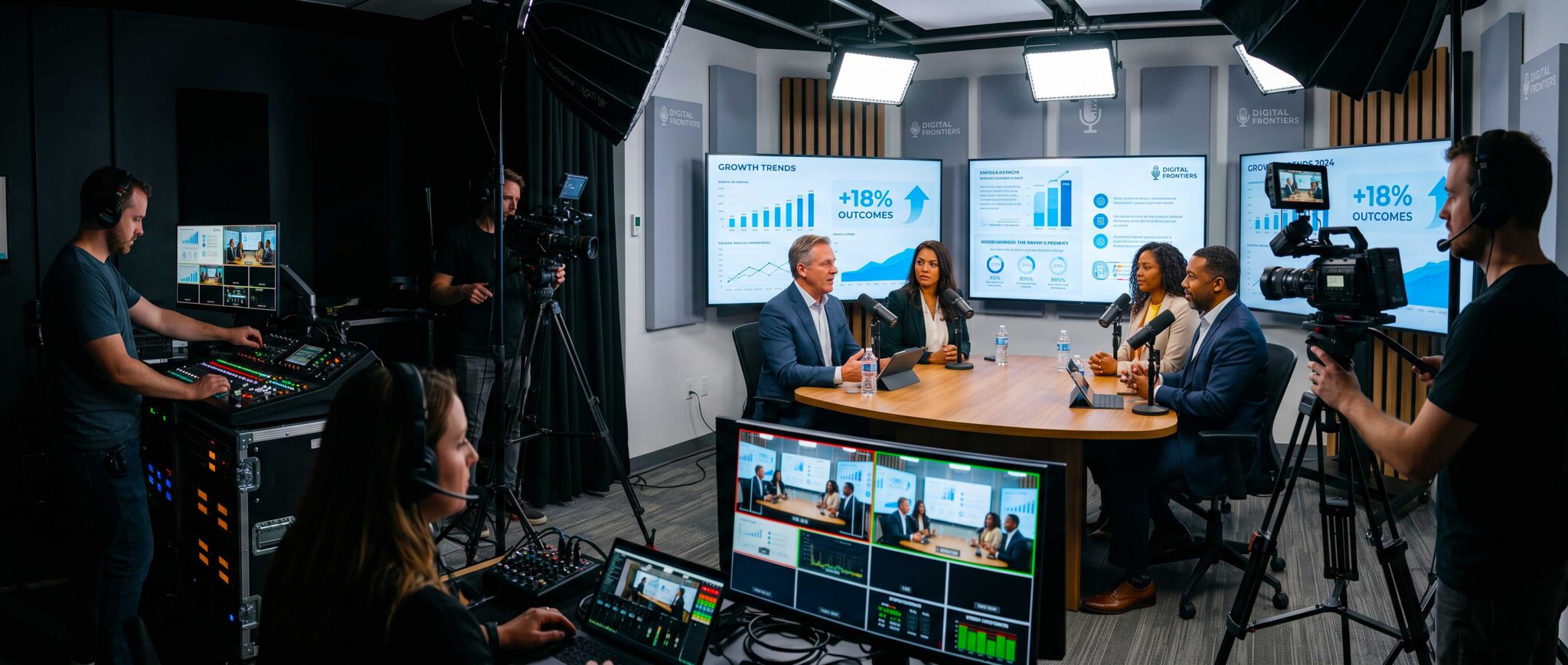
Audiences notice production quality, even when they cannot articulate why. A well-lit studio, properly framed cameras, and crisp content display all communicate professionalism and lend credibility to the clinical data being presented.
When KOLs are placed in anenvironment that feels broadcast quality, they tend to rise to meet it, bringing more energy, more passion, and more precision to their delivery.
All of this translates directly into information retention.
Preparation Is the Performance
Rehearsals are where a lot of the real work happens. The written word and spoken word require fundamentally different things from a presenter, and only by saying content aloud can a speaker discover what needs to be adjusted for authenticity and flow. Even the most accomplished KOLs benefit from time in front of the camera before going live. That preparation builds the confidence that makes genuine connection with an audience possible.